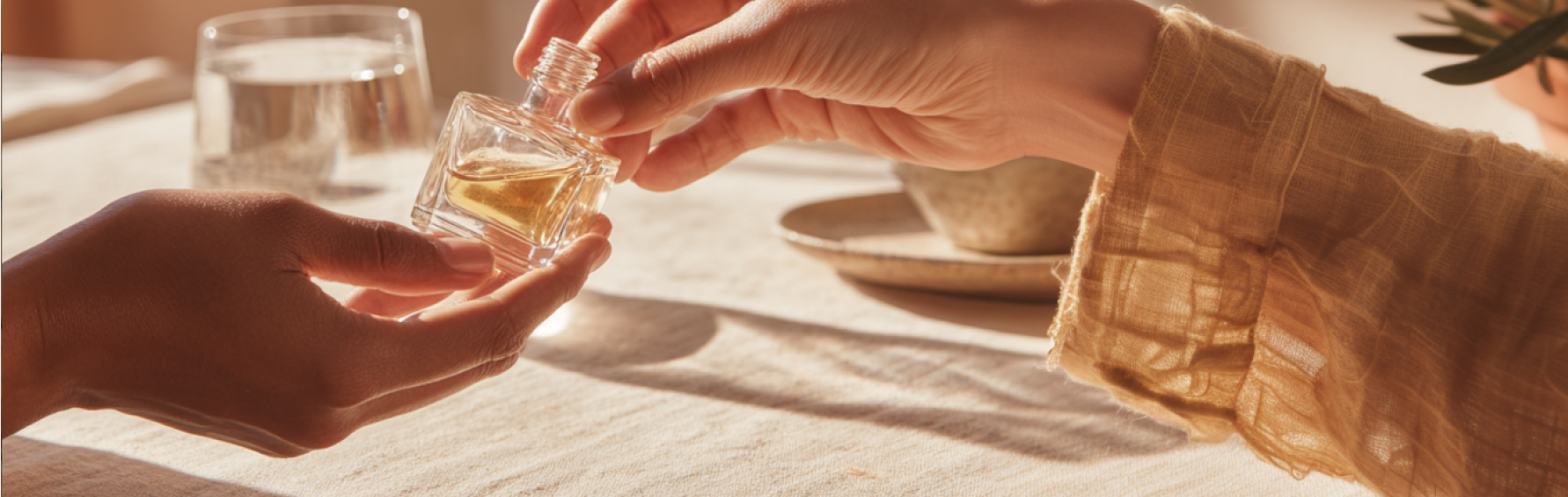
India and the Gulf have traded fragrance for centuries. Attars from Kannauj, oud, rose and sandalwood have travelled to Arabia for generations, and today many perfume, oud and bakhoor brands in the UAE, Saudi Arabia and across the GCC source from Indian manufacturers. This guide is for Gulf brands considering it: what to source, what to check and how to choose a partner.
Why Gulf brands source from India
Gulf brands source perfume, attar, oud, mukhallat and bakhoor from India because of India’s long heritage in oil-based perfumery, its own production of key naturals such as rose, jasmine, vetiver and agarwood, deep understanding of Middle Eastern scent preferences, and competitive large-scale manufacturing. Experienced Indian fragrance houses supply finished products, bulk oils or both.
- Heritage: Kannauj has made attar for centuries. Read Kannauj attar.
- Naturals: rose, kewra, jasmine, vetiver, nagarmotha and oud are part of India’s own production.
- Scale: large compounding and filling capacity for growing brands.
- Proximity and trade ties: established shipping routes and long business relationships.
What Gulf brands source from India
| Product | Typical supply | Learn more |
|---|---|---|
| Attars and perfume oils | Bulk or filled | Attar manufacturing |
| Mukhallat | Bulk concentrate or filled | Mukhallat manufacturing |
| Bakhoor fragrance oils | Bulk compositions for bakhoor makers | Bakhoor manufacturing |
| Oud and oriental perfumes | Fragrance oil or finished Eau de Parfum | What is oud |
| Natural oils and absolutes | Rose, jasmine, vetiver, agarwood and more | Naturals |
| Air care and home fragrance | Oils for diffusers and scenting systems | Air care |
Profiles that perform in the GCC
- Oud-led: rich agarwood with rose, saffron or amber.
- Rose and floral: Taif-style rose character, jasmine and kewra.
- Amber, musk and resin: warm, heavy and long-lasting.
- Contemporary Middle Eastern: traditional depth with a lighter, modern balance for younger buyers.
- Bakhoor profiles: built for smoke character, diffusion and retention on fabric. Read what is bakhoor.
Longevity is non-negotiable in the Gulf. Customers expect fragrance to last on skin and clothing for many hours, so intensity, diffusion and fixation should be tested before approval.
Sourcing Middle Eastern fragrance for a GCC brand?
Quality checks for Middle Eastern fragrance
- Wear test on skin and fabric over a full day.
- Oil base: confirm which base is used for attars and mukhallat.
- Natural content: ask how much genuine oud, rose or sandalwood is used, and how it is sourced.
- Batch consistency: compare repeat batches with an approved standard.
- Stability in heat: Gulf storage and shipping conditions are hot. Test accordingly.
- Bakhoor: test smoke character and fabric retention, not only cold smell.
Export, documents and logistics
- Documents: ask for the commercial documents, safety data and fragrance compliance information your market and importer need.
- Labelling: confirm Arabic and English label requirements and product registration rules in your country with a local advisor.
- Shipping: perfume containing alcohol is classed as flammable for transport, which affects packing and freight method.
- Lead times: plan around Ramadan, Eid and the wedding season, when demand peaks.
Choosing an Indian manufacturer
- How long have you supplied Gulf brands?
- Do you distil or extract your own naturals?
- Can you supply both bulk oil and finished, filled product?
- How do you keep batches consistent for repeat orders?
- Can you develop an exclusive profile for my brand?
How Sawai can help
Sawai has supplied the Gulf since 1982, when hand-packed fragrances from Kannauj travelled to the region as its first international order. Today we develop and manufacture Middle Eastern fragrances with a deep understanding of regional preferences and the technical discipline needed for consistent, large-scale production, across mukhallat, bakhoor compositions, oriental attars and contemporary Middle Eastern profiles.
Every fragrance is developed against clear criteria: intensity, longevity, diffusion, stability and batch consistency. Our control over sourcing, extraction and processing, including our own agarwood, rose, kewra and jasmine, keeps key materials stable across cycles of demand. We supply bulk oils or finished, filled products, and can create exclusive profiles for your brand.
Talk to our Middle Eastern team
Frequently asked questions
Why do Gulf perfume brands source from India?
For India’s heritage in attar and oil-based perfumery, its own naturals such as rose, jasmine and agarwood, its understanding of Middle Eastern preferences and competitive large-scale manufacturing.
Can Indian manufacturers supply finished perfume for the GCC?
Yes. Experienced manufacturers supply both bulk fragrance oils and finished, filled products for Gulf brands.
What fragrances sell best in the Gulf?
Oud, rose, amber, musk and saffron profiles, attars and mukhallat, bakhoor, and contemporary Middle Eastern blends for younger buyers.
What should I check before sourcing attar from India?
The oil base, natural content, longevity on skin and fabric, stability in heat, batch consistency and export documentation.
Does Sawai export to the UAE and Saudi Arabia?
Sawai has supplied the Gulf since 1982 and works with brands, exporters and distributors across the region. Get in touch.
From Kannauj to the Gulf, since 1982
Attar, mukhallat, bakhoor and oud fragrances for GCC brands, made with naturals we produce ourselves.